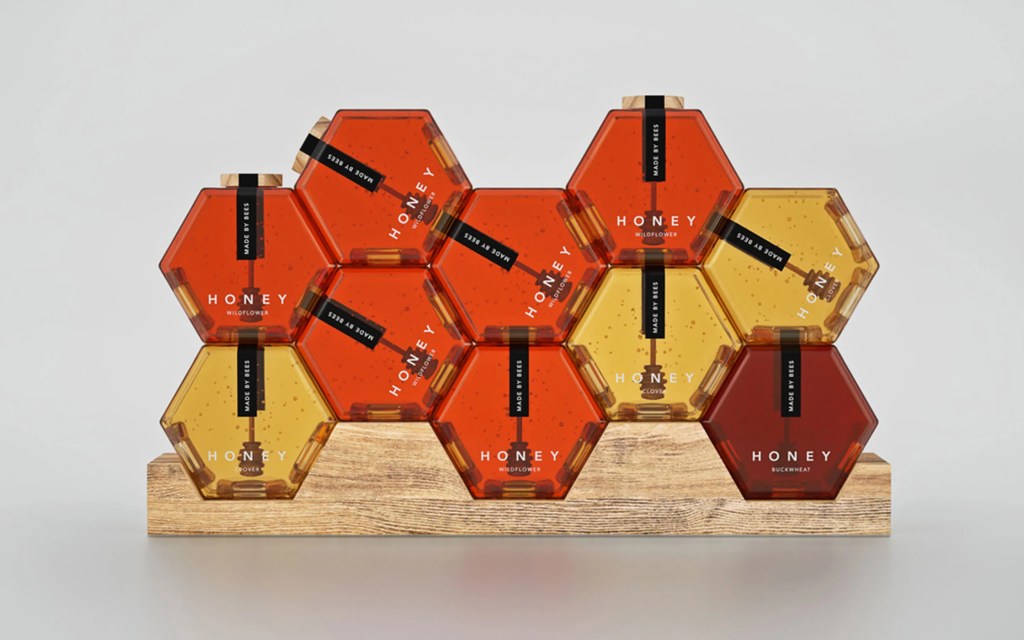
Nature is something that is all around us. Something that we see everyday. Something that can inspire us and has been shown to have a positive impact on mental health.
But…
Can we find good design in nature?
From animals making there homes to volcanic rock formations to a butterfly’s wings, nature is filled with lots of interesting patterns and designs. But are theses actually well designed?
Honeycomb
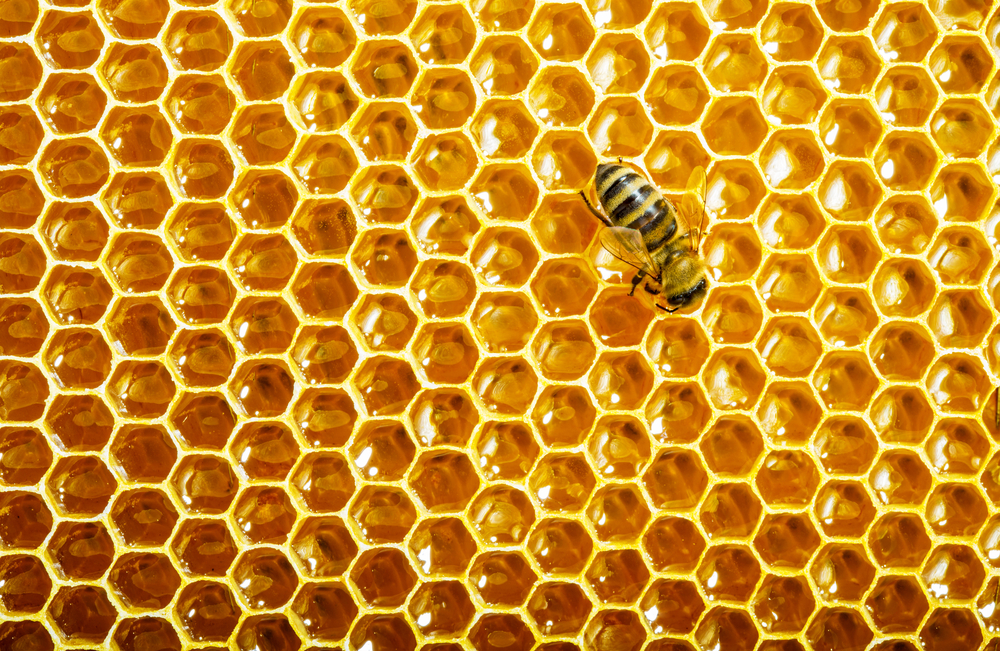
Taking honeycomb as an example, Bees create the shape by connecting circles together which when compressed form the hexagon shapes we associate with honeycomb. The hexagon structure within bee-hives is not only aesthetically pleasing but actually serves a purpose. Mathematician Thomas Hales proved that convex hexagons organised in a grid have the smallest perimeter area of any tessellated shape. This has the benefit of the bees spending less energy building the structure which they use as a nursery for new bees, short term pollen storage and to store the hives honey reserves. Additionally, of the three shapes which fit together on a flat surface without gaps, the hexagon structure is the most structurally sound, having a high compressive strength. This is due to the hexagonal cells supporting each other allowing them to withstand large loads. The hexagonal structure is also highly stable due to its ability to evenly distribute the acting forces throughout the structure which creates a structure resistant to deformation. This hexagonal structure is not only found in beehives but in rock formations like the Giant’s Causeway, plants and other insect species’ homes and with the benefits of these structures listed above its not hard to see why.
This honeycomb structure has been adapted for several different industries with it being used in aircraft fuselages and wings, construction of bridges, buildings and other infrastructure and even panel-type sound absorption.
Designs inspired by Nature
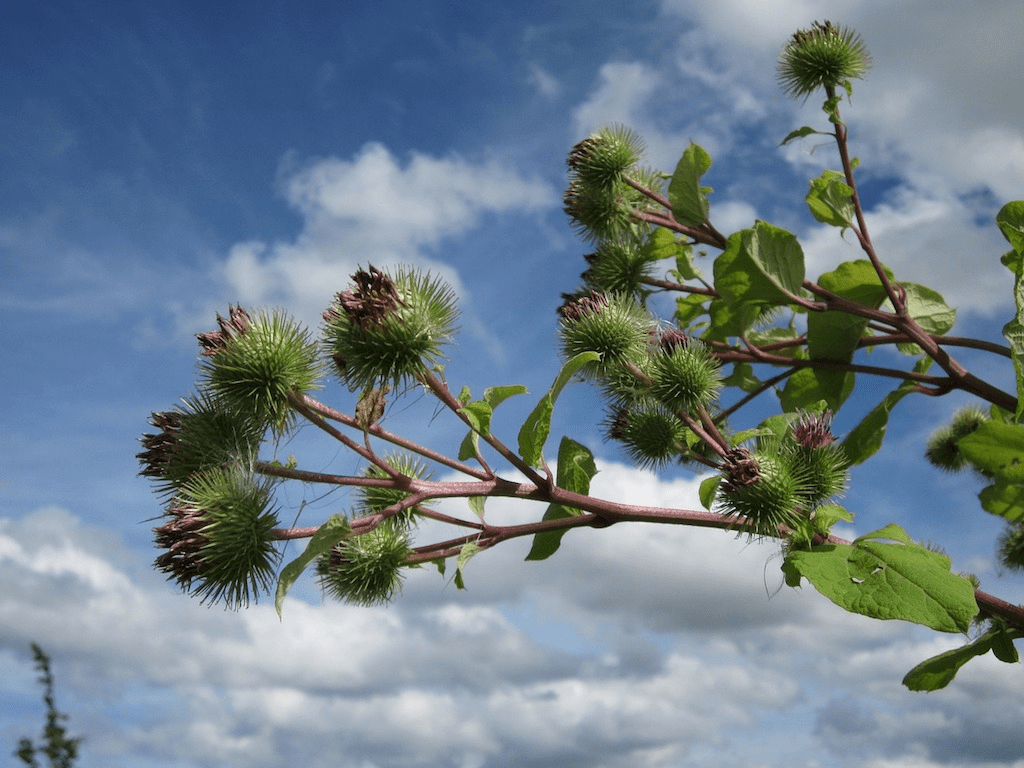
In the past many designs and inventions have been inspired by nature. Take Velcro for example, George Del Mestral started to examine burrs to see how they attached themselves to things after seeing them attached to his dog. From this he discovered that the burrs has little hooks at the end, allowing them to stick to different things. Del Mastral used this principle to create Velcro.
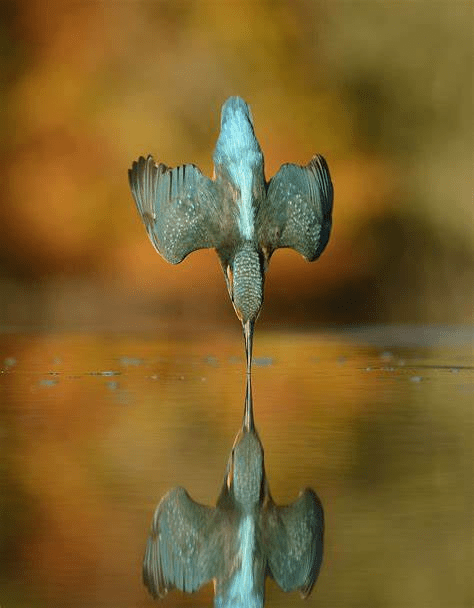
Another example of deign from nature is the Shinkansen Train. This being inspired by the Kingfisher. The kingfisher can easily move from air to water with little noise or slash at relatively high speeds while hunting from prey. The elongated beak of the kingfisher is a streamlined, pointed wedge shape is believed to be the reason for this. During the designing of the Shinkansen Train the engineers were having issues with the train producing a sonic boom whenever it was leaving a tunnel due to the build up of atmospheric pressure waves while the train was travelling through the tunnel. The engineers turned to the kingfisher, changing the shape of the front of the train to mimic that of a kingfishers beak. This had the benefit of also making the train more aerodynamic.
Other designs which have a link to nature are: Wind Turbines that have been inspired by wale fins due to how aerodynamic they are; LEDs were inspired by fireflies’ asymmetric microstructures within there lanterns which allow for a greater interaction with light with the surface than a flat surface does.
Conclusion
These examples are biomimicry; patterns and designs found within nature that have been adapted to improve existing engineering and designs or create new products. This is just a few examples of the designs in nature that have inspired designs and engineering. With the influence of nature being key to so many engineering solutions, it would be hard to say we can’t find great design within nature. Nature in many cases, has evolved to be how we see it, adapting to survive so I guess it makes sense that the solution to some of our issues might already be solved by nature. I believe there is a lot which can be discovered from nature in both the structural and the aesthetics of design.
 RGE Design
Leave a comment