
In today’s fast‑evolving healthcare landscape, AI is no longer a futuristic concept, it is actively transforming clinical practice. From enhancing diagnostic precision and predicting adverse outcomes to personalising treatment and streamlining operational workflows, recent studies underscore AI’s potential to improve patient care while easing resource constraints.
Transforming Diagnostics Through Deep Learning
Artificial Intelligence in Radiology
A pivotal study by Mello‑Thoms and Mello (2023) illustrates how deep convolutional neural networks (CNNs) can accurately detect subtle abnormalities in radiological images. For example, an AI model was trained on thousands of chest computed tomography (CT) scans and achieved diagnostic accuracy the same as senior radiologists when identifying early lung nodules. By analysing minute variations in pixel intensity, the system can flag potential malignancies well before clinical symptoms arise. This technology has the potential to reduce diagnostic errors in busy clinical settings.
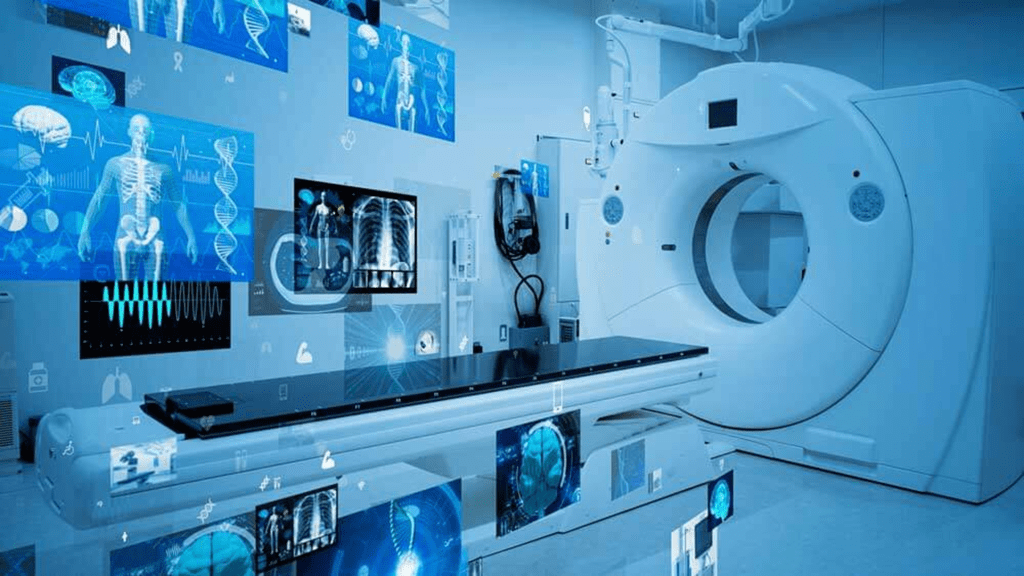
Beyond thoracic imaging, AI models are being developed to support neurological diagnoses. Advanced magnetic resonance imaging (MRI) algorithms assess subtle differences in brain structure to help differentiate between types of dementia. By quantifying atrophy patterns and changes in white matter, these tools can assist neurologists in making earlier and more accurate differential diagnoses, a crucial step in initiating timely interventions for progressive neurological conditions.
Enhancing Predictive Analytics for Disease Management
Forecasting Adverse Events
AI is paving the way for more proactive care through predictive analytics. A recent systematic review by Kitsios et al. (2023) highlights machine‑learning models that integrate diverse data sources, from electronic health records to wearable device metrics, to forecast clinical events. One illustrative example involves predicting glycaemic fluctuations in diabetes; by continuously monitoring glucose levels alongside nutritional data and physical activity logs, AI models can accurately forecast episodes of hypoglycaemia or hyperglycaemia. These early warnings enable clinicians to adjust treatment regimens in real time, thereby reducing emergency hospital admissions and improving long‑term outcomes.
Personalised Medicine in a Data‑Driven Era
Tailoring Treatments in Oncology
The promise of personalised medicine is being realised as AI integrates multi‑omic data to craft bespoke treatment plans. For instance, a study by Chen, Hsiao, Lin, and Fann (2025) demonstrates how AI‑driven platforms are increasingly employed in oncology. By combining tumour genetic signatures with comprehensive patient clinical histories, these systems can predict which chemotherapeutic regimens are most likely to succeed on an individual basis. This targeted approach minimises the traditional trial‑and‑error process, thereby reducing adverse effects and ultimately improving survival rates.
Streamlining Clinical Workflows
Optimising Hospital Operations
AI’s impact extends well beyond direct clinical decision‑making. In a study by Alowais et al. (2023), the integration of AI‑powered workflow management systems in a hospital setting resulted in a significant reduction in patient waiting times—up to 30%. These systems automate routine tasks such as appointment scheduling, triaging, and initial data collection by interfacing seamlessly with electronic health records (EHRs). For example, an embedded AI module can alert clinicians to potential medication interactions during the prescribing process, thereby preventing adverse events and enhancing overall patient safety.
Ethical and Regulatory Considerations
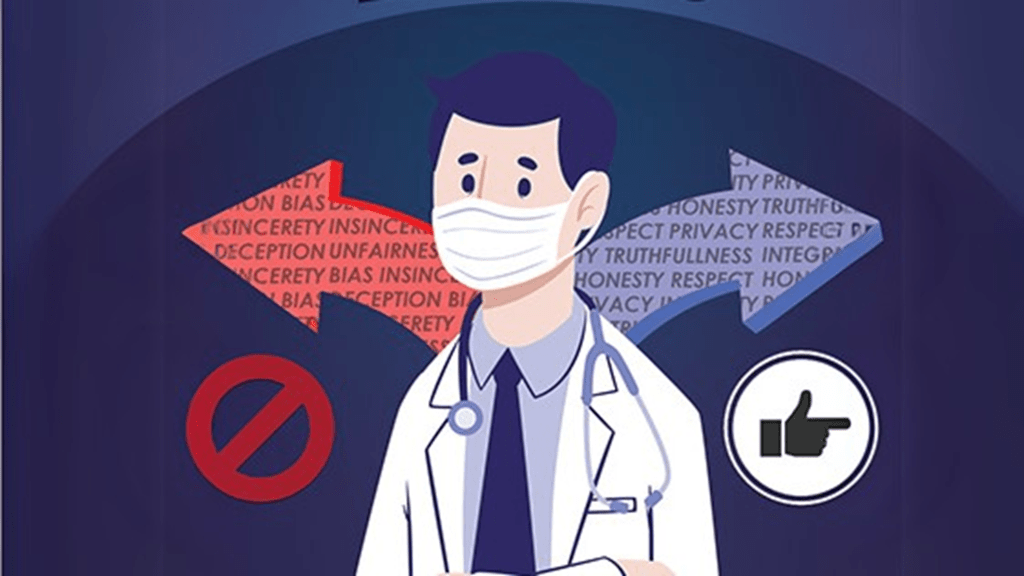
Balancing Innovation with Accountability
While the benefits of AI are significant, they are accompanied by vital ethical and regulatory challenges. Hulsen (2024) emphasises that transparency in AI’s decision‑making processes is essential for building trust among clinicians and patients alike. For instance, clinical decision support systems are now being designed to provide not only a diagnostic output but also an explanation of the key factors influencing that decision, thereby addressing the “black box” concern. Moreover, rigorous validation and ongoing ethical audits are required to ensure that these tools do not perpetuate bias or compromise patient data privacy.
Looking to the Future
The convergence of these AI‑driven approaches heralds an era in which healthcare becomes increasingly predictive, personalised, and efficient. As research continues to push the boundaries of what AI can achieve, interdisciplinary collaboration will be paramount in addressing ethical challenges and ensuring that these innovations are implemented safely and equitably. Future directions may include integrating remote monitoring for rural populations, refining explainable AI techniques, and further reducing disparities in healthcare delivery. The transformative journey of AI is just beginning, and its potential benefits for both patients and clinicians are immense.
References
- Alowais, S. A., Alghamdi, S. S., Alsuhebany, N., Alqahtani, T., Alshaya, A. I., Almohareb, S. N., Aldairem, A., Alrashed, M., Bin Saleh, K., Badreldin, H. A., Al Yami, M. S., Al Harbi, S., & Albekairy, A. M. (2023). Revolutionising healthcare: The role of artificial intelligence in clinical practice. BMC Medical Education, 23, 689.
DOI: 10.1186/s12909-023-04698-z - Chen, Y.-M., Hsiao, T.-H., Lin, C.-H., & Fann, Y.-C. (2025). Unlocking precision medicine: clinical applications of integrating health records, genetics, and immunology through artificial intelligence. Journal of Biomedical Science, 32, 16.
DOI: 10.1186/s12929-024-01110-w - Hulsen, T. (2024). Artificial intelligence in healthcare: ChatGPT and beyond. AI, 5(2), 550–554.
DOI: 10.3390/ai5020028 - Kitsios, F., Kamariotou, M., Syngelakis, A. I., & Talias, M. A. (2023). Recent advances of artificial intelligence in healthcare: A systematic literature review. Applied Sciences, 13(13), 7479.
DOI: 10.3390/app13137479 - Mello‑Thoms, C., & Mello, C. A. B. (2023). Clinical applications of artificial intelligence in radiology. British Journal of Radiology, 96(1150), 20221031.
DOI: 10.1259/bjr.20221031
 RGE Design
Leave a comment