About
A university project completed in 2023 where the brief was to create 10 identical giftware items to sell.
Idea
I really struggles to get a theme or story for my project in the beginning. I knew I wanted to design something plant related but was just designing randomly without any direction. I think part of this was that for the first time at University I had the opportunity to use any workshop, material or process I wanted to. I decide to take inspiration from home, the Giant’s causeway to be more exact. A place I’d gone so many times and where there was flower growth never seen before during Covid.
Challenges
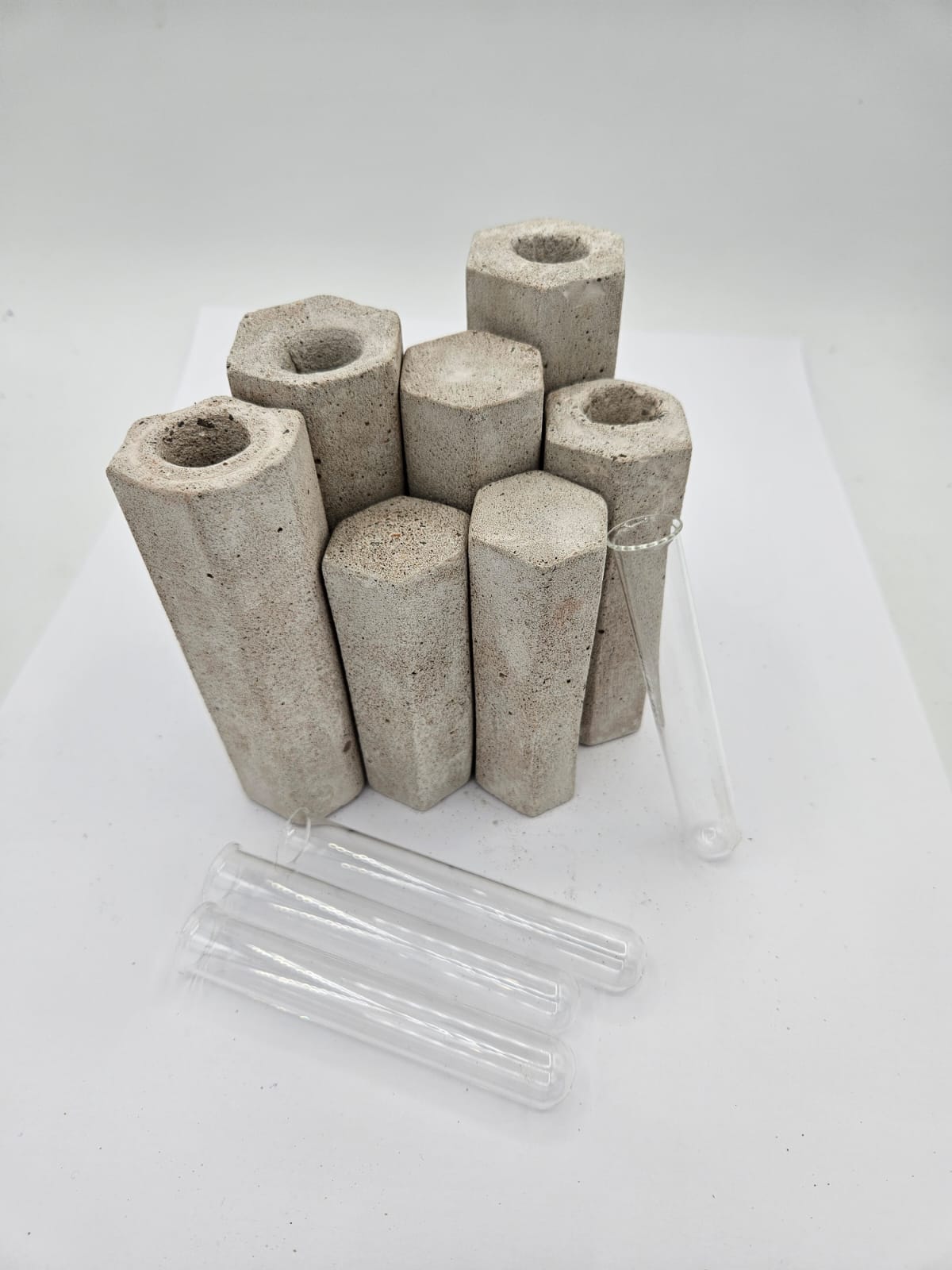
The whole process was a challenge, with 7 different modular pillars in the design there were a multitude of things to go wrong. My biggest challenge, however, was getting my chosen material to work. I wanted to work with cement fondue which is a type of faster drying concrete. My first trails worked perfectly, however, when it came to making the final product the concrete kept crumbling. Ultimately, I had to change the material and used plaster with colouring and aggregate for the final project.
Results
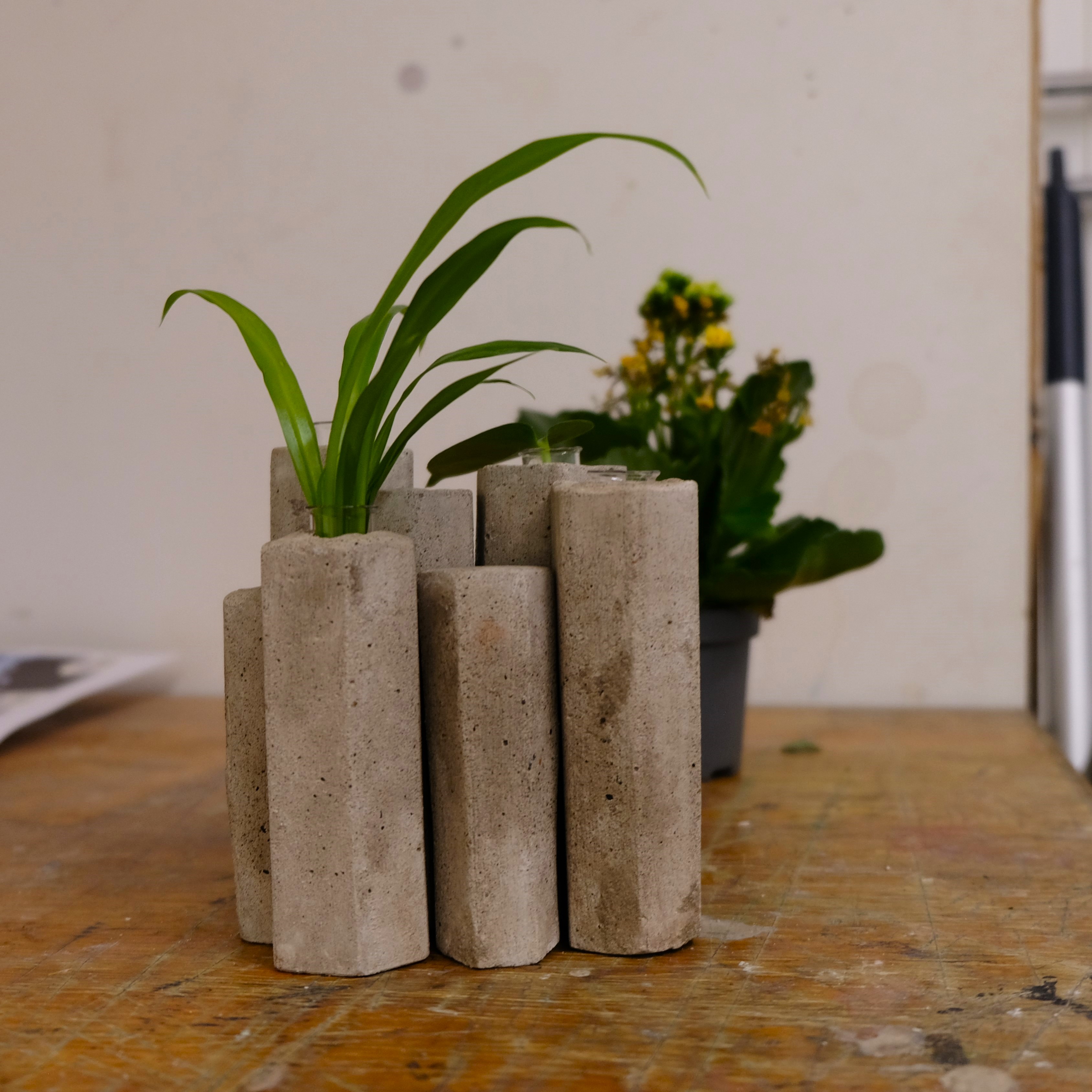
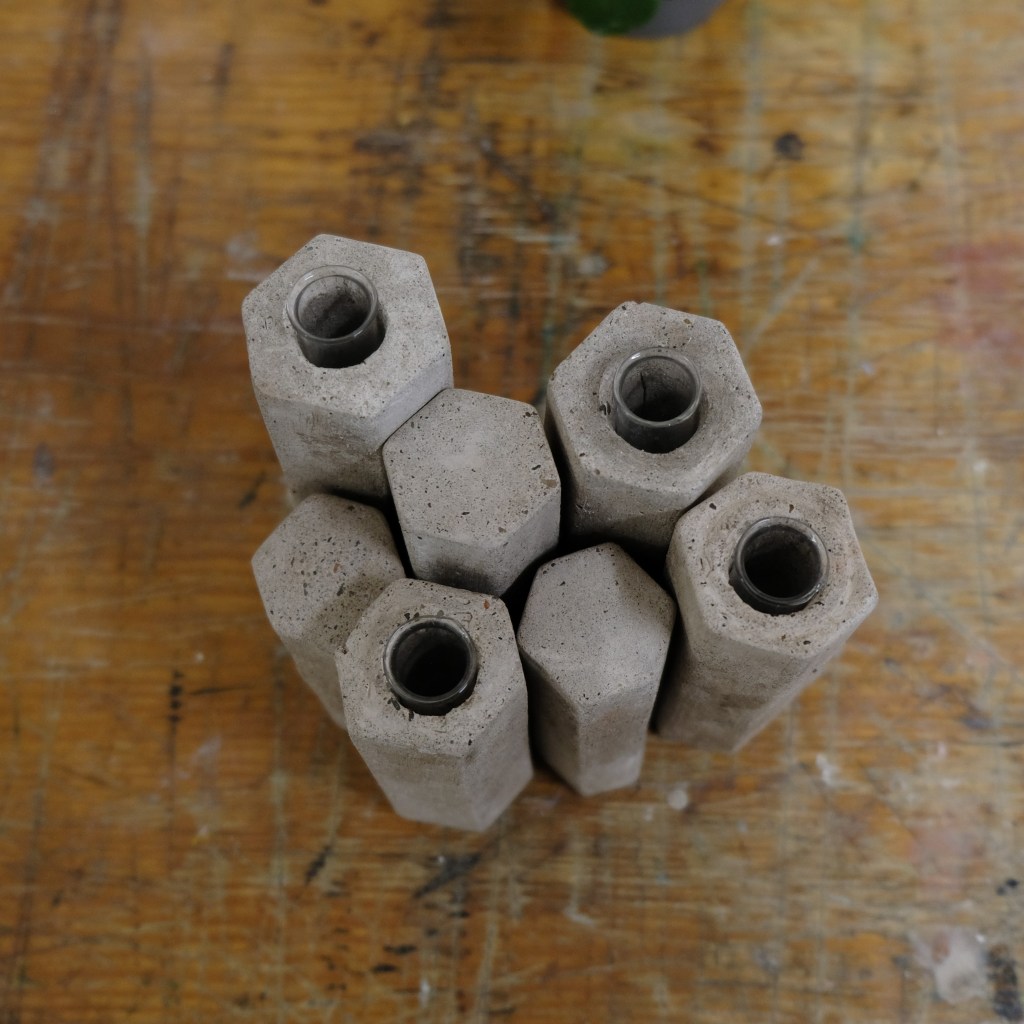
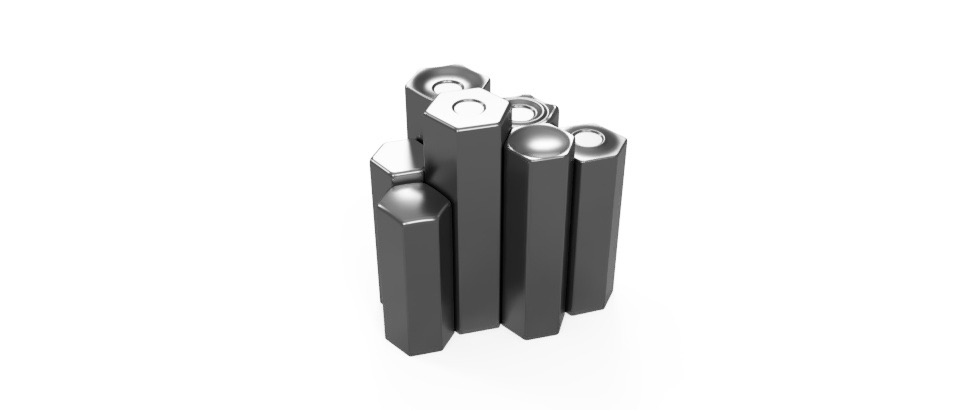
The result was a modular plant propagator with 4 pillars with test tubes for propagation and 3 for decoration. Each pillar was a different high and had different patterns to the top of them to more closely resemble the organic-ness of the Giant’s Causeway. The plaster produced a lighter colour than I was aiming for and so doesn’t quite hit the mark for the colouring of the basalt rock of the causeway. This, I now believe, is almost better than exactly replicating the causeway as it allows for the aggregate to stand out more.
Process
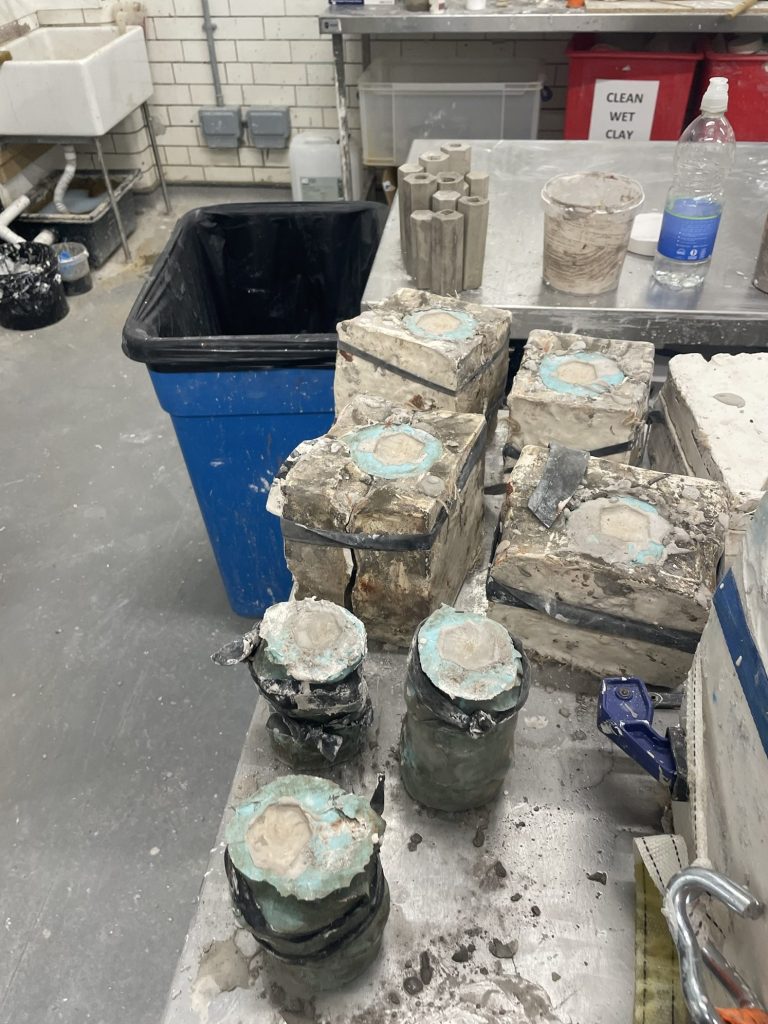
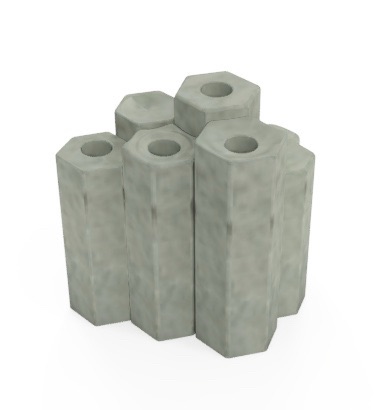
From sketching to foam modelling to CAD, the process to get to the end result of the plant propagator involved a lot of trial and error and constant testing. I initially sketched out my ideas on paper to be able to properly evaluate them. Once settled on a design I used small foam models to learn how to cast silicone, plaster, Jesmonite, concrete and cement fondue and evaluated them to figure out which fitted best with my design idea. From there, I used CAD to mock up the design and perfect it before moving onto 3D printing the masters to make the silicone moulds and plaster jackets. The final step in the process was casting the plaster into the moulds, sanding them down and sealing them against water.
Learning
Resilience is so important to both designer and engineers. I had many set backs throughout this project which pushed me to become a better design, teaching me to push through them and plan ahead encase of set backs. I also learnt when it is time to move away from an idea or stop trying to get something to work when trying to work to a deadline. This is important as in this project I could have changed my material much earlier without affecting the overall outcome and has more time for refinement of the plant propagator.

Finn’s Plant Propagator
X
 RGE Design